
High content screening (HCS) is a powerful tool for understanding the effects of drugs, small molecules, and genetic manipulations on cells. The process involves imaging cells at high throughput and using software to analyze the images and extract quantitative data. The extracted data then needs to be further analyzed and processed into reports and visualization. Due to a large amount of extracted data, this needs a specialized solution. In this case study, we will showcase how our HCS Pipeline software improved the HCS data analysis process in our customer.
The Challenge
The company had a pipeline in place for HCS data analysis, but the process was slow and inefficient:
- Each project involved a data scientist, which was a bottleneck due to overload of work in the data science team.
- The data was analyzed manually.
- The data science team could only focus on on-going tasks.
- Hiring new data scientists was difficult due to low supply on the jobs market.
The goal was to:
- Transfer the routine data analysis from data scientists to biologists.
- Optimize the process.
- Give more data analysis options to the biologists.
- Reduce the hiring need for data scientists.
Our Solution
The client implemented our HCS Pipeline data analysis platform. The main features of the platform are:
- Self-service data analysis and visualization app.
- Running in the cloud.
- Supports authentication and access control.
- The user can build custom data analysis pipelines.
- Supports interactive visualizations.
- Currently supports HCS and cell painting data analysis modules, but can be expanded with custom modules for other data types (even not imaging).
- The data analysis pipeline app allowed scientists to do data analysis on the go, reducing the need for support from the data science team.
Results
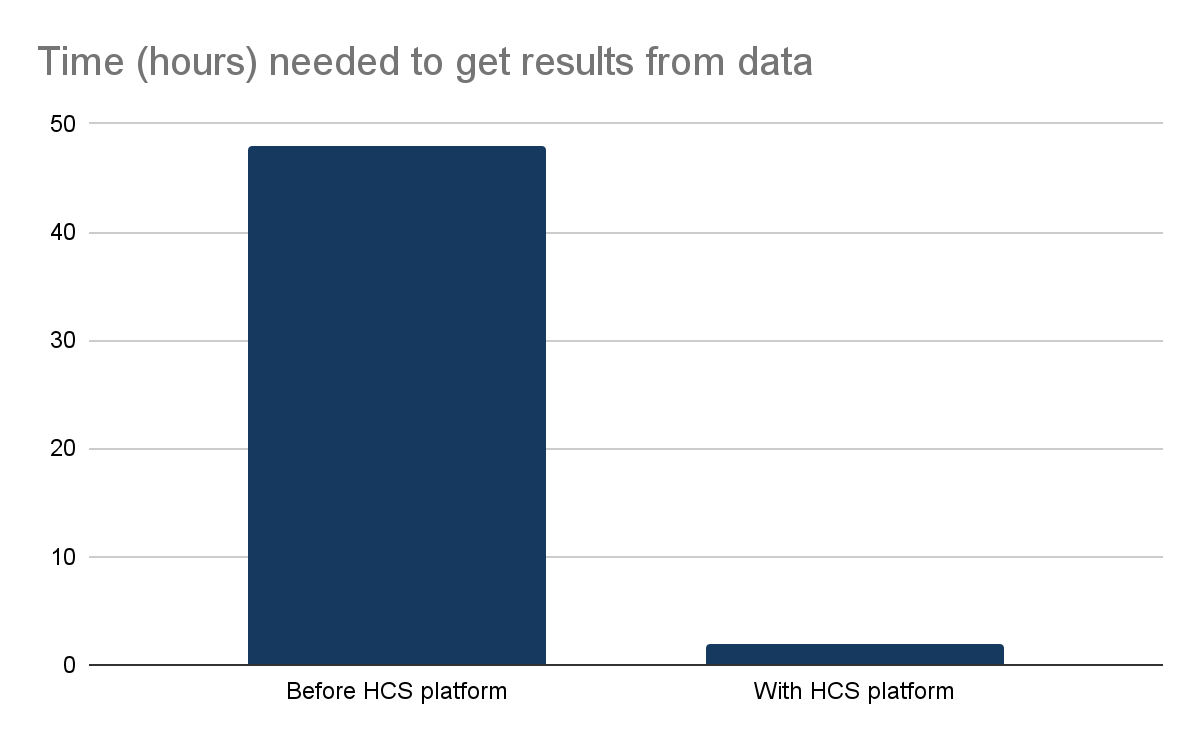
Overall the platform increased the efficiency of the data analysis process. The changes we implemented had a profound impact on the company’s HCS process. The time-to-results was reduced from 2 days to 2 hours, greatly increasing the speed of the process. The self-service data analysis pipeline allowed scientists to perform their own data analysis, reducing the need for support from the data science team and freeing up time for more complex projects. The implementation of the platform also reduced the cost of data science operations by 90%.
Conclusion
The implementation of HCS Pipeline had a significant impact on the company’s processes. The time to results was reduced from 2 days to 2 hours, optimizing the project timelines and providing results to the customers faster. It reduced the cost of the data science operations by 90%. It also freed up scientists time for other work. The company was able to achieve its goals of improving the efficiency and speed of its project processes.