
High content screening (HCS) is a powerful tool for understanding the effects of drugs, small molecules, and genetic manipulations on cells. The process involves imaging cells at high throughput and using software to analyze the images and extract quantitative data. In this case study, we will be examining the work we did with a company that was looking to improve their HCS data analysis process.
Download a PDF version of this case study.
The Challenge
The company had a pipeline in place for HCS data analysis, but the process was slow and inefficient:
- Data management was manual, mostly storing data on file servers.
- The data was analyzed manually.
- The data science team could only focus on on-going tasks.
The goal was to:
- Optimize the process.
- Give more data analysis options to the scientists.
- Expand and coach a data science team to grow the capabilities.
Our Solution
We provided the company with an HCS data platform. The main components of the platform are:
- Image management platform.
- Self-service data analysis and visualization app.
- Custom data analysis for complex projects.
- Full integration of all components.
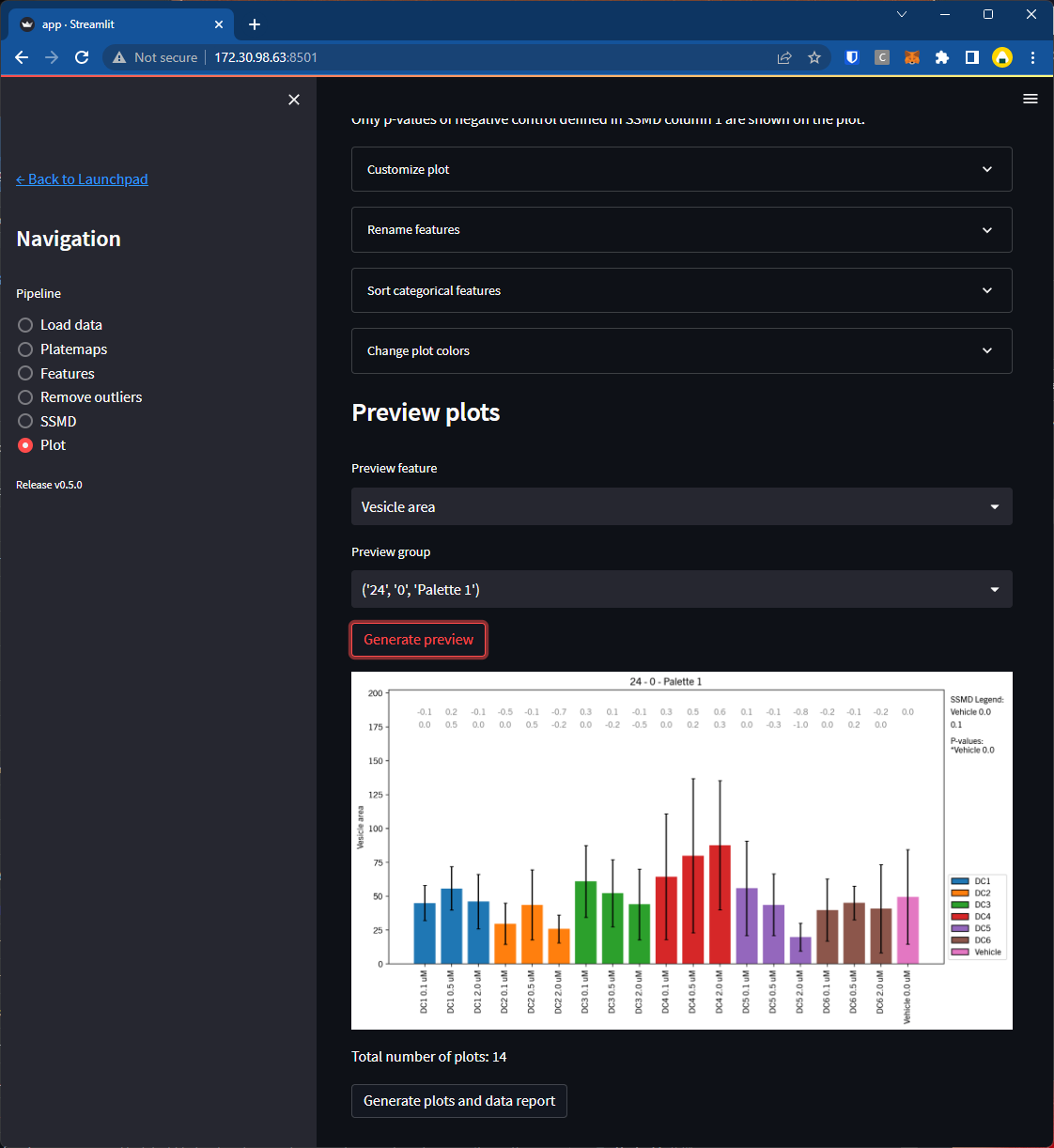
Overall the platform increased the efficiency of the data analysis process. The main features were:
- Image management platform was integrated with microscopes for automated image import.
- The data analysis pipeline app allowed scientists to do data analysis on the go, reducing the need for support from the data science team.
- Metadata and data features processing, statistical analysis.
- Automated QC process with printable report.
- Plotting tool to generate publication-quality plots for clients.
Toolset: Python (Streamlit, Pandas), docker deployment
Results
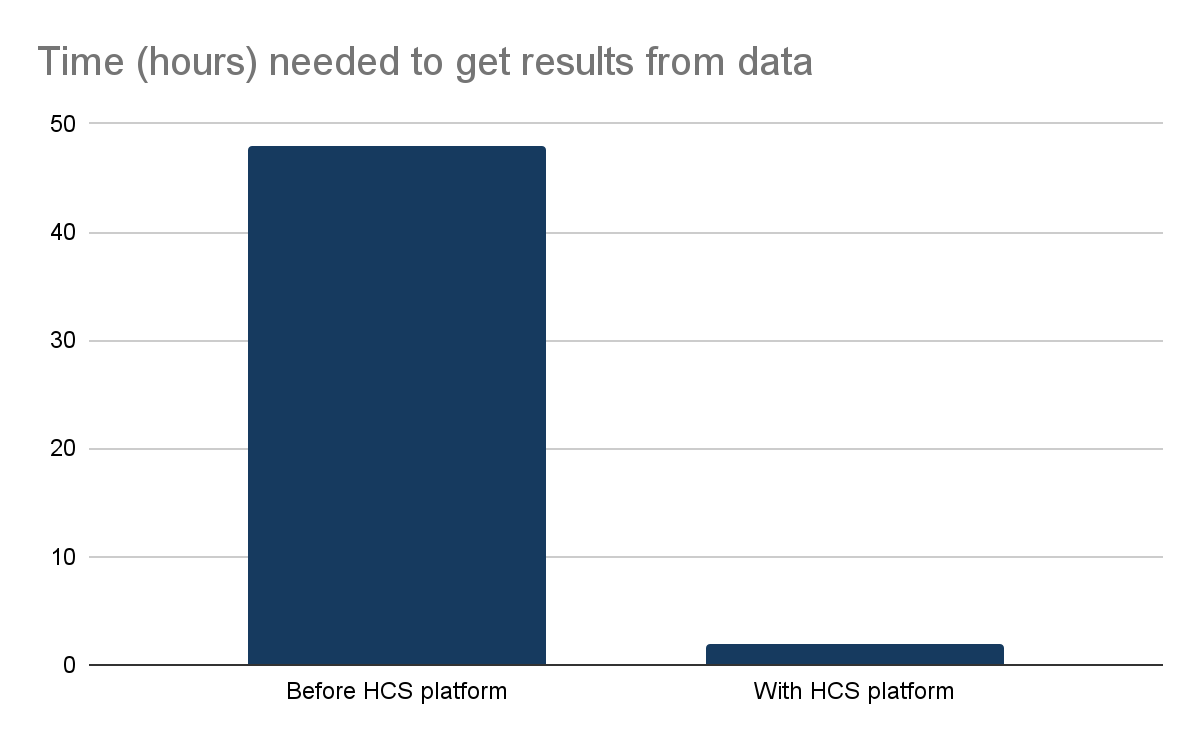
The changes we implemented had a profound impact on the company’s HCS process. The time-to-results was reduced from 2 days to 2 hours, greatly increasing the speed of the process. The self-service data analysis pipeline allowed scientists to perform their own data analysis, reducing the need for support from the data science team and freeing up time for more complex projects. The image management platform ensured that data was collected and managed efficiently, reducing the time required to collect and manage data.
Conclusion
The implementation of the HCS data platform had a significant impact on the company’s processes. The time to results was reduced from 2 days to 2 hours, optimizing the project timelines and providing results to the customers faster. It also freed up scientists time for other work. The company was able to achieve its goals of improving the efficiency and speed of its project processes.